 Fraunhofer Institute for Software and Systems Engineering
In the "TrustED" project, we are researching how citizens can manage their digital identity securely, autonomously, and across Europe using an EUDI-compliant wallet (EUDI = European Digital Identity). Using self-sovereign identity, verifiable credentials, and privacy-preserving technologies, we enable trustworthy European data spaces where sensitive information can be shared in a controlled and purpose-limited manner.
TrustED
Enabling Trustworthy European Data Spaces through Self-Sovereign Identity and Privacy-Preserving Technologies

The Challenge
Today, digital identities are often tied to individual platforms and difficult for users to control. At the same time, new risks arise in decentralized data spaces regarding secure data transfer and the reliable authentication of individuals and organizations. This is particularly sensitive when health data or proof of volunteer work is to be used across national and linguistic borders. Solutions are needed that release only the truly necessary information while still ensuring interoperability and legal compliance.
Our Services
As part of TrustED, Fraunhofer ISST is working with project partners to develop the requirements and reference architecture for trustworthy, EDC-based European data spaces (EDC = Eclipse Dataspace Components). We are designing an EUDI-compliant wallet for self-sovereign identity, devising authorization mechanisms based on verifiable presentations, and developing privacy-friendly procedures for federated learning in the healthcare context. A typical scenario is an international application for a volunteer position: Applicants submit sensitive documents, such as criminal background checks, to a trusted authority that verifies the criteria; organizations then only make data-minimal inquiries to confirm whether the requirements are met.
The Result
TrustED delivers field-tested concepts and prototypes for secure, user-centered identity management in European data spaces. These include an EUDI-compatible wallet with robust authorization functions, as well as building blocks for the use of privacy-enhancing technologies in federated learning. Citizens, volunteers, and organizations can thus exchange sensitive data in a controlled and GDPR-compliant manner; results are incorporated into open ecosystems such as Eclipse XFSC, among others.
The Partner
- GRADIANT
- Fundación Cibervoluntarios
- CyberSocial Lab
- Fraunhofer ISST
- Fraunhofer AISEC
- Infocert
- PROMPTLY Health
- SESTEK – Voice Biometrics
- TREE Technology
- ULS Coimbra
- Fundazione Mondo Digitale - Associate Partner
The project online
Funding
- Funding Body: HORIZON Europe 2020
- Grant ID: 101168467
- Duration: October 1, 2024 – September 30, 2027
Podcast episode: Digital ID instead of a plastic card [German]
How we'll use digital wallets to verify our identity in the future
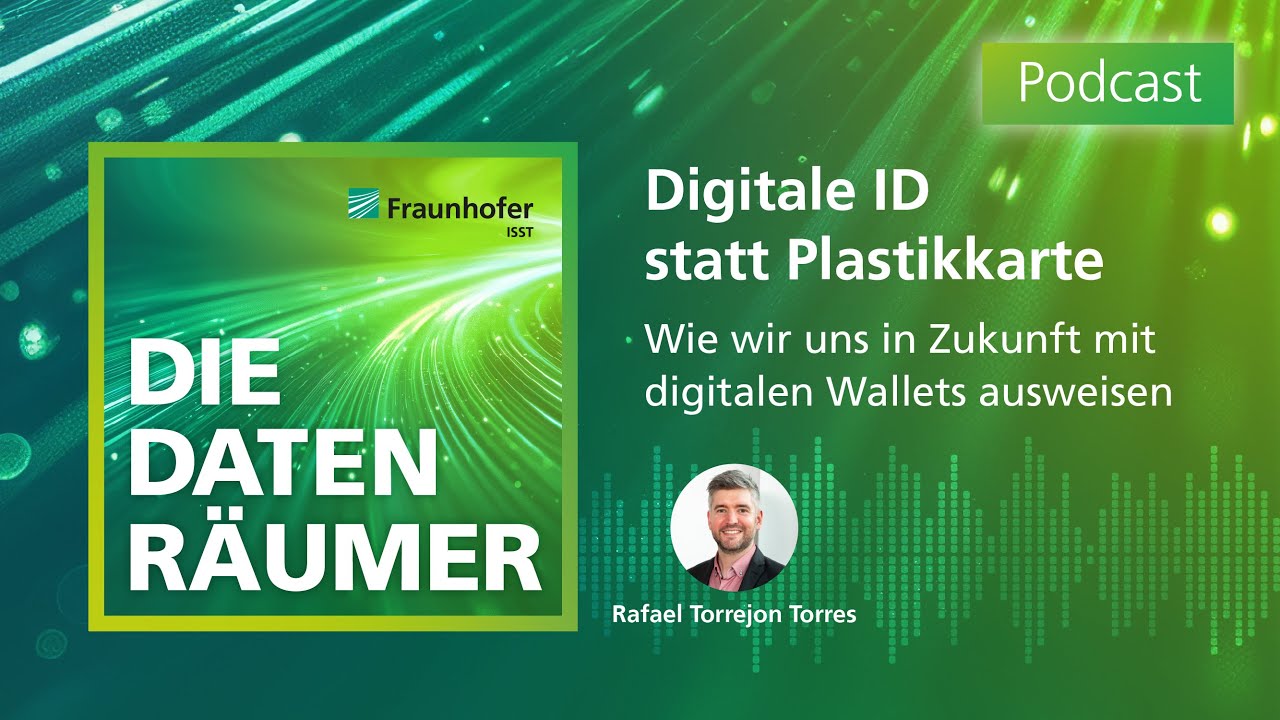
Privacy warning
With the click on the play button an external video from www.youtube.com is loaded and started. Your data is possible transferred and stored to third party. Do not start the video if you disagree. Find more about the youtube privacy statement under the following link: https://policies.google.com/privacyWe pay with our cell phones, we fly with digital tickets—but to prove our identity for a flight, we still need paper and plastic. The question is: How much longer will this last? Digital wallets like the EUDI Wallet can make it possible to use our digital identity securely and flexibly in everyday life—even across national borders. Rafael Torrejon Torres explains the challenges that need to be addressed with digital wallets, particularly with regard to data protection and trust. He is a Business Developer on the Healthcare Team at Fraunhofer ISST and a Project Manager on the EU TrustED project, which is developing a secure and practical wallet solution for EU citizens.