Project and lecture videos

Innamark: Invisible Watermarks in Text

Protect text data. Maintain control.

Privacy warning

With the click on the play button an external video from www.youtube.com is loaded and started. Your data is possible transferred and stored to third party. Do not start the video if you disagree. Find more about the youtube privacy statement under the following link: https://policies.google.com/privacy

In a digitally connected world, vast amounts of sensitive text data circulate every day: contracts, reports, emails, and now AI-generated content as well. But this openness also brings new challenges: it is often difficult to trace the origin, modifications, and distribution of texts.

This video introduces Innamark, a technology developed at Fraunhofer ISST for digital, invisible and robust watermarks in texts. It enables texts to be uniquely marked and made traceable and trackable throughout their entire lifecycle without compromising the readability or the usability.

The video shows: 

  • Where the challenges lie in handling text data 
  • How invisible watermarks in text work 
  • The added value Innamark offers companies and organizations 
  • How the technology can be integrated into existing systems

Innamark creates transparency, trust, and control over text data. This results in security, traceability, and data sovereignty. 

More information

Innamark: Digital invisible watermarks in texts | Sensitive Business Documents

Protect text data. Maintain control.

Privacy warning

With the click on the play button an external video from www.youtube.com is loaded and started. Your data is possible transferred and stored to third party. Do not start the video if you disagree. Find more about the youtube privacy statement under the following link: https://policies.google.com/privacy

In many business sectors, it is crucial to be able to trace at any time where documents originated, how they were modified, and who had access to them. 

Innamark is an invisible, robust, digital solution that enables the secure handling of sensitive business documents in regulated industries such as banking, insurance, law firms, healthcare, and manufacturing.

Innamark uses invisible digital watermarks in text to ensure the integrity, authenticity, and traceability of a document throughout its entire lifecycle, without restricting its use or readability.

This video shows what Innamark enables for regulated industries:

  • Secure handling of sensitive and regulated documents 
  • Traceability of changes and versions 
  • Protection against unauthorized sharing and data leaks 
  • Ensuring compliance requirements 

With Innamark, organizations retain control over their documents while meeting the highest standards for security, transparency, and regulatory requirements.

More information

Innamark: Digital invisible watermarks in texts | Publishing & Content

Protect text data. Maintain control.

Privacy warning

With the click on the play button an external video from www.youtube.com is loaded and started. Your data is possible transferred and stored to third party. Do not start the video if you disagree. Find more about the youtube privacy statement under the following link: https://policies.google.com/privacy

In a digital world where content is quickly shared, copied, and repurposed, it is becoming increasingly difficult to track the origin and use of texts. Innamark is a solution for protecting texts and intellectual property in publishing, marketing, and content publishing.

Innamark uses invisible, robust, digital watermarks in texts to ensure that content is uniquely identified and its use is made transparent, traceable, and trackable—without compromising readability or the user experience.

This video shows what Innamark enables for content creators:

  • Protection of journalistic content, publications, and marketing texts 
  • Traceability of content reuse and distribution 
  • Visibility of authorship and intellectual property 
  • Control over the use of one’s own content 

Innamark helps companies and organizations protect their content while creating transparency regarding its use—for greater trust and data sovereignty in the digital content ecosystem. 

More information

Innamark: Digital invisible watermarks in texts | Software & AI Integration

Protect text data. Maintain control.

Privacy warning

With the click on the play button an external video from www.youtube.com is loaded and started. Your data is possible transferred and stored to third party. Do not start the video if you disagree. Find more about the youtube privacy statement under the following link: https://policies.google.com/privacy

Especially when processing and generating large volumes of text data, it is becoming increasingly important to transparently track the origin, modifications, and usage of that data.

Innamark is an invisible, robust, digital solution for software providers and AI/LLM integrators who wish to enhance their systems with features that promote trust, traceability, and compliance. Innamark can be seamlessly integrated into existing software solutions and, through invisible digital watermarks in texts, offers new ways to uniquely identify content and make it traceable throughout its entire lifecycle.

This video shows what Innamark enables for software providers and AI/LLM integrators:

  • Seamless integration of Innamark into existing software and platforms 
  • Extension of content management, collaboration, and AI systems 
  • Traceability of AI-generated and processed texts 
  • Support for compliance and trust requirements

With Innamark, providers can offer their customers additional features for security, transparency, and control—as a scalable extension of existing systems. 

More information

PFLIP: Intersectoral Nursing Core Data Set and Nursing Data Repository [German only]

Project video

Patient-centered and continuous care across institutional boundaries in nursing: That is the goal of the PFLIP project funded by the Federal Ministry of Education and Research. An interdisciplinary team from Fraunhofer ISST, Connext Communication GmbH, Bochum University of Applied Sciences and Diakonie Michaelshoven is defining a core nursing data set and building an intersectoral nursing data repository as part of the project. This research will help, for example, in the development of AI solutions to support nursing.

Further information about the project can be found here.

Digital lifesaver: how a data space provides fast help in an emergency [english subtitles]

Science Slam

Privacy warning

With the click on the play button an external video from www.youtube.com is loaded and started. Your data is possible transferred and stored to third party. Do not start the video if you disagree. Find more about the youtube privacy statement under the following link: https://policies.google.com/privacy

Imagine you live alone and are dependent on a walking aid. A fall or a medical emergency can quickly become life-threatening - but how can help be provided quickly and in a targeted manner in such a situation? In this video, Colin Dzieia, research associate in the Healthcare department at Fraunhofer ISST, explains the A.D.Le.R. project, an automated detection, reporting and guidance system for emergency services that recognizes emergencies in real time and provides relevant information reliably. What makes it special: The core technology of A.D.Le.R is a secure data space in which personal health and location data can only be accessed in an emergency and only by authorized emergency services. The project team combines various technologies to achieve this. Smart sensors can be used to detect falls and medical emergencies and make automatic emergency calls. The data space enables the targeted and secure exchange of information, with those affected being able to decide for themselves which data is transmitted in an emergency. As a result, emergency services only receive the relevant information to coordinate the operation efficiently and provide targeted assistance. By integrating these technologies, A.D.Le.R is helping to offer people with disabilities greater safety in everyday life and make rescue operations more efficient.

Platform Economy: How can data flow better in production? [english subtitles]

Science Slam

Privacy warning

With the click on the play button an external video from www.youtube.com is loaded and started. Your data is possible transferred and stored to third party. Do not start the video if you disagree. Find more about the youtube privacy statement under the following link: https://policies.google.com/privacy

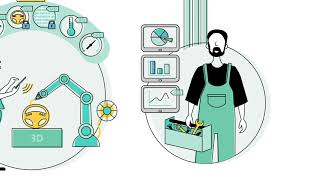
Imagine you are a tool manufacturer and half of the workers on your factory premises do not even belong to your company - how is the sharing of information supposed to work smoothly and trustfully? And what do the cryptic abbreviations 2PL, 3PL and 4PL have to do with it?

Steffen Biehs, research associate in the ‘Industrial Manufacturing’ department at Fraunhofer ISST, explains in this video. He shows how the project team implemented a reference implementation, i.e. an example of a specific process in tool manufacturing, with the help of a platform economy solution.To do this, Steffen and his team analysed the data flow from the planning of inventory and production supply to delivery planning, transport outside the factory and status management. 

To ensure that data can be shared confidently within this process, they have developed connectors with which the individual parties involved can share data in a secure data space via the ‘Silicon Economy’ logistics platform. This forms the basis for a reference architecture that can be used to implement all possible processes in the Silicon Economy.

How well does the blood flow? Digital solutions detect constrictions early [english subtitles]

Science Slam

Privacy warning

With the click on the play button an external video from www.youtube.com is loaded and started. Your data is possible transferred and stored to third party. Do not start the video if you disagree. Find more about the youtube privacy statement under the following link: https://policies.google.com/privacy

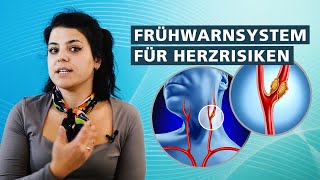
Over time, arteries can undergo pathological changes such as plaque and thus form constrictions. They are very dangerous and harbour risks of heart attacks or strokes.Pinar Bisgin, research associate in the Healthcare department at Fraunhofer ISST, reports in the video on a solution that can record the flow noises in the carotid artery, i.e. the large main artery in the neck, and assign them to individual people. The system was developed by Fraunhofer ISST together with partners in the Bodytune2Clinic project. It can be used to identify personal changes at an early stage. Research is now being conducted into how well the solution can determine the extent of plaque in the arteries on both the left and right and identify the need for treatment.

The project partners of "BodyTune2Clinic" are IDTM GmbH, MedEcon Ruhr, Evangelisches Krankenhaus Herne, MR:comp GmbH. The project is funded by the German Federal Ministry of Education and Research.

Let your knowledge grow - Evaluate protected data with LLMs

Privacy warning

With the click on the play button an external video from www.youtube.com is loaded and started. Your data is possible transferred and stored to third party. Do not start the video if you disagree. Find more about the youtube privacy statement under the following link: https://policies.google.com/privacy

The world is becoming more and more information-rich, sometimes of good and sometimes of bad quality. Large Language Models (LLMs) like ChatGPT are trained on this information to answer our questions and assist us. To improve their answers, LLMs can use methods like Retrieval Augmented Generation (RAG), which attaches external information to the question to generate better answers. However, the most valuable and interesting information is often not freely accessible. So, how can large language models deliver better answers by incorporating protected information?

If we combine LLMs and data spaces using the concept of retrieval-augmented generation, questions can be sent to a data space, asking each data provider how likely it is that their data set will improve the answer. The data sets are offered to the user together with a probability calculation of how helpful the data is. The user can accept the terms of use (e.g. by purchasing the data) and then gain access to the raw data. The LLM on the consumer side then generates an answer to the original question from the new data.

By linking data spaces with LLMs via the concept of RAG, business cases can be realised that were not feasible in the past. LLM-based data spaces for searching in protected data are a development of the Fraunhofer ISST in cooperation with Huawei using the technology Boot-X.

"Innovations on the road"

Keynote by Prof. Dr. Boris Otto at TRANFORM24

Privacy warning

With the click on the play button an external video from www.youtube.com is loaded and started. Your data is possible transferred and stored to third party. Do not start the video if you disagree. Find more about the youtube privacy statement under the following link: https://policies.google.com/privacy

What comes after the proof of concept? How we can put digital innovations on the road | March 6, 2024 | 12:20 p.m. | Transformation Stage | 

There is a need for action in the implementation of digital strategies in Germany. We have no problem developing innovations in this country. But we also have too many reasons for not putting them on the road.

That's why the digital transformation in Germany is - to be honest - sobering. In too many industries, processes are still based on Excel, e-mail and telephone

Boris Otto is calling for a tangible "master plan for digital transformation" and already has the most important cornerstones ready. In this keynote, he explains why we need eco-systems instead of ego-systems, why we should view software not as a by-product but as a value-adding factor and why innovation potential cannot unfold if we always fear in advance what might not work.

Why sharing data pays off! | IEDS-Project

Privacy warning

With the click on the play button an external video from www.youtube.com is loaded and started. Your data is possible transferred and stored to third party. Do not start the video if you disagree. Find more about the youtube privacy statement under the following link: https://policies.google.com/privacy

Companies can benefit from cross-company data sharing and strategic data management in a variety of ways. The IEDS (Incentives and Economics of Data Sharing) project, financed by the German Federal Ministry of Education and Research (BMBF), is looking at the benefits that may be realized and how firms should proceed both internally and externally.

Visit www.ieds-projekt.de/en for further details.

We're looking forward to the exchange!

Eclipse Dataspace Connector – Open-Source Technology for B2B Data Sharing

Across the economy, companies are using digital technologies to pivot into innovative services, accelerate growth, and transform business processes. Data assets play an important role in this modern economy. To share this data, new technology is needed that supports openness, interoperability, extensibility, sovereignty and transparency. The Eclipse Dataspace Connector is that technology. The open-source project is supported by Fraunhofer Institute for Software and Systems Engineering ISST, Daimler TSS, BMW Group, Deutsche Telekom, Microsoft, Amazon AWS, SAP, ZF Friedrichshafen and GAIA-X AISBL as well as the International Data Spaces Association.

Dataspace Connector - The Guardian of Sovereign Data Exchange

Privacy warning

With the click on the play button an external video from www.youtube.com is loaded and started. Your data is possible transferred and stored to third party. Do not start the video if you disagree. Find more about the youtube privacy statement under the following link: https://policies.google.com/privacy

The Dataspace Connector (DSC) is an open source software for sovereign data exchange. Even after the data has been exchanged, the data provider retains control over what happens to the data. Based on the International Data Spaces reference architecture, the DSC allows data to be extended with policies and conditions and processed. The DSC is a core component for building data spaces according to the DIN SPEC 27070 standard. The Dataspace Connector is licensed under Apache 2.0. and is absolutely free for personal or commercial use.

Further information: www.dataspace-connector.io

Shared Digital Twin – using data as a strategic resource

(only in German)

The Shared Digital Twin was developed based on the RIOTANA IoT architecture created by Fraunhofer ISST. With RIOTANA, informative performance figures can be generated from the raw data of ongoing processes (such as vibrations, temperature, or friction) in real time. The administration shell standardized by the industry 4.0 platform is used as the digital twin, so the framework and interfaces of the twin are clearly defined and uniform.

Shared however means that the data do not remain only in the company but are exchanged in network structures. Here the solution uses IDS connectors promoted by Fraunhofer and numerous industry partners within the framework of the International Data Spaces (IDS) initiative, with the goal of enabling the standardized, sovereign exchange of data between various companies. By using International Data Spaces, control of the data is always retained by the company that provides the data by attaching usage policies to the data that are shared with cooperation partners. Both companies that share the digital twin can also enrich the data with information.

Thus the Shared Digital Twin with the administration shell and IDS connectors is based on two standards that are already being used by industry. What database is used in the twin can be decided according to the respective use case.

Project SMITH – Smart Medical Information Technology for Healthcare

(only in German)

SMITH stands for Smart Medical Information Technology for Healthcare. It describes one of four publicly funded projects under the medical information sciences initiative of the Federal Ministry of Education and Research (BMBF), with the goal of improving individual patient care by efficiently making data available for clinical research.

A reference architecture was developed for this purpose, allowing the participating university hospitals and their data integration centers to exchange data using a central platform: the SMITH service platform. The SMITH marketplace developed by our researchers is one of several applications serving as the central point of access for the end user. It permits researchers to access and use data of all data integration centers that are relevant for their research.

Watch the video to find out exactly how these processes work and learn about the technical background.